Listings, sellers and Spreadsheet sites, read with a cold eye
What we learned opening every cover photo on our shelves: how to read an option menu, which seller signals matter, and the small mistakes that cost the most.
Checked and updated October 22, 2026
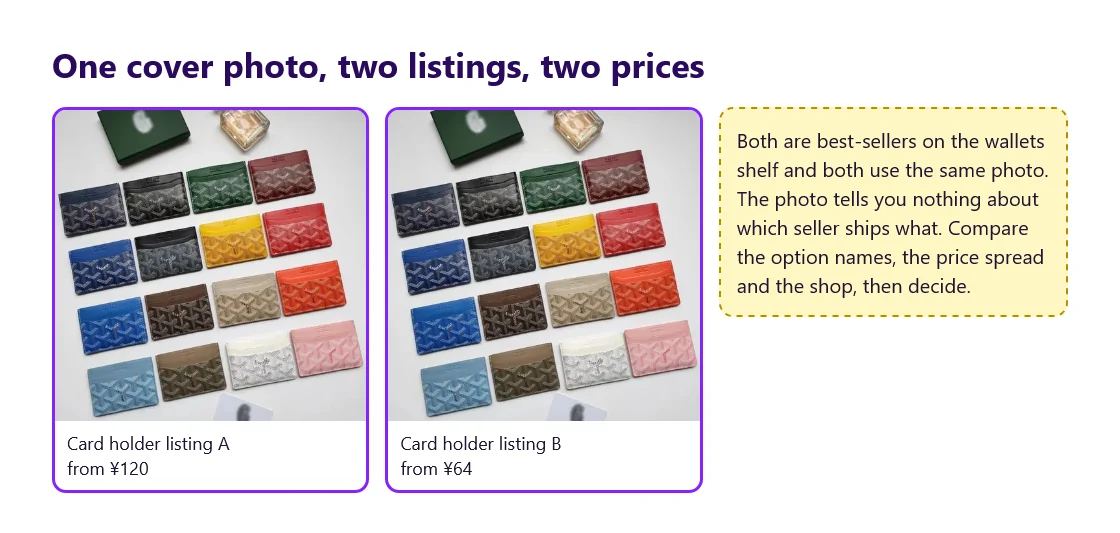
The same cover photo does not make two offers equivalent
Illustrative comparison: two wallet listings use one photograph. Listing A is CNY 20 for one wallet; B is CNY 15 each with a three-piece minimum. The image alone cannot answer which purchase suits you.
| Check | A useful comparison |
|---|---|
| Quantity and variant | One selected wallet at CNY 20 versus three at CNY 45, before delivery. |
| Dimensions and material | Read the selected option’s specifications; identical photos do not establish identical goods. |
| Seller and route | Check the shop record and item acceptance separately; neither is proved by the card. |
For one wallet, compare the full CNY 20 order with the full CNY 45 order, then add the relevant costs. Use two-payment budgeting and route limits before treating either as a cheaper delivered purchase.
The option menu is the real product page
A listing on a Chinese marketplace is a cover photo, a title, a price that starts low, and an option menu. The option menu is the contract: what you select there is what gets bought. Covers often show a whole range, titles are written for search engines, and the starting price usually belongs to the cheapest option.
- Scroll the option menu until you reach the precise colour and size you want, and read the price printed beside it.
- Match the option name to its photo. Menus are not always in the same order as the cover grid.
- Check whether the price is for one piece or a pack. One dress listing on our shelves sells nine colours in one pack.
- Look for a size chart in centimetres and compare it with a garment you own.
When we built this site we opened 162 best-seller covers to choose 108 picks. Two of them on the wallets shelf used the same photo at different prices, which is the clearest lesson we can offer about covers.
Clues a seller leaves on the listing itself
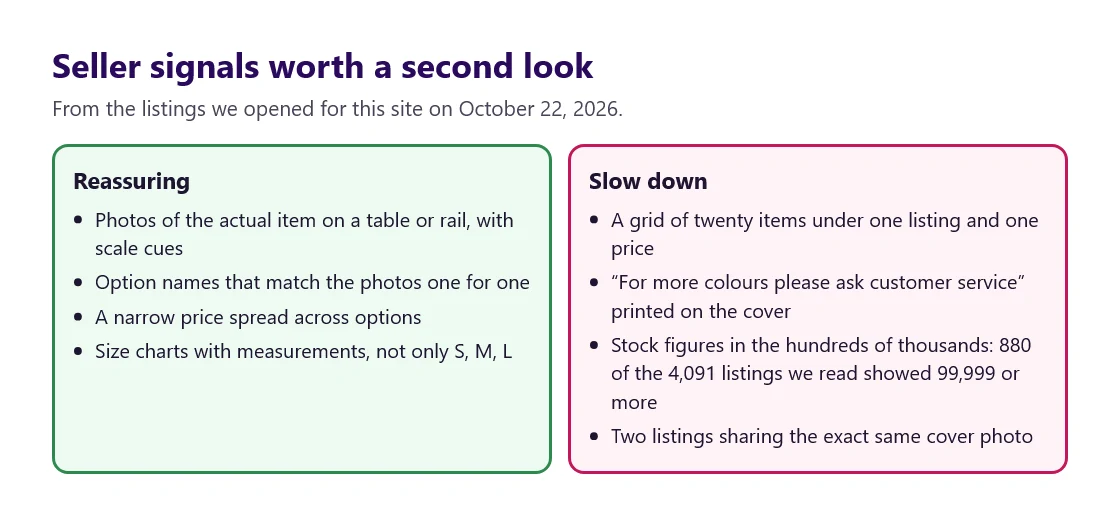
You rarely get a seller rating through an agent, so read the signals the listing gives away. Reliable sellers tend to show the real item with scale cues, keep option names in step with the photos, and publish measurements. Listings that show twenty products for one price, print “ask customer service for more colours” on the cover, or claim stock in the hundreds of thousands deserve a slower look.
That last signal is common: of the 4,091 best-selling listings we read across all shelves, 880 showed a stock figure of 99,999 or more. That number is typed in by the seller and says nothing about real stock.
Six marks for a Spreadsheet site, scored on ourselves too
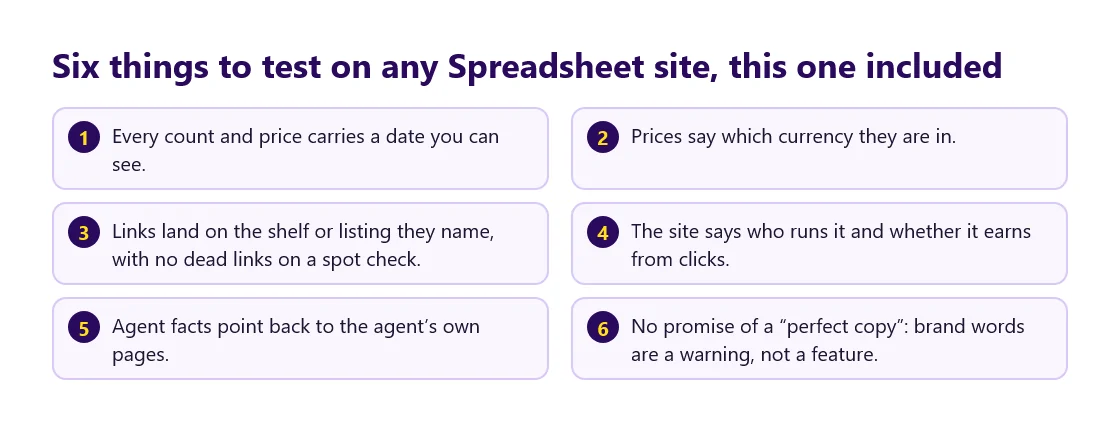
What makes a good Spreadsheet site is mostly upkeep, since a catalogue is worth only as much as its last check. The test is simple and you can run it in two minutes on any of them, including this one: are numbers dated, are prices labelled with a currency, do links land where they say, does the site say who runs it and whether it earns from clicks, and does it avoid promising a perfect copy of anything?
Our answers: every count and price here is dated October 21 or 22, 2026; prices are in yuan unless stated; every link was checked before publishing; who we are covers ownership and money; and we leave brand words out of our descriptions.
Mistakes that cost first-time buyers money
None of these are dramatic. They are the small misses that turn a cheap haul into an expensive one:
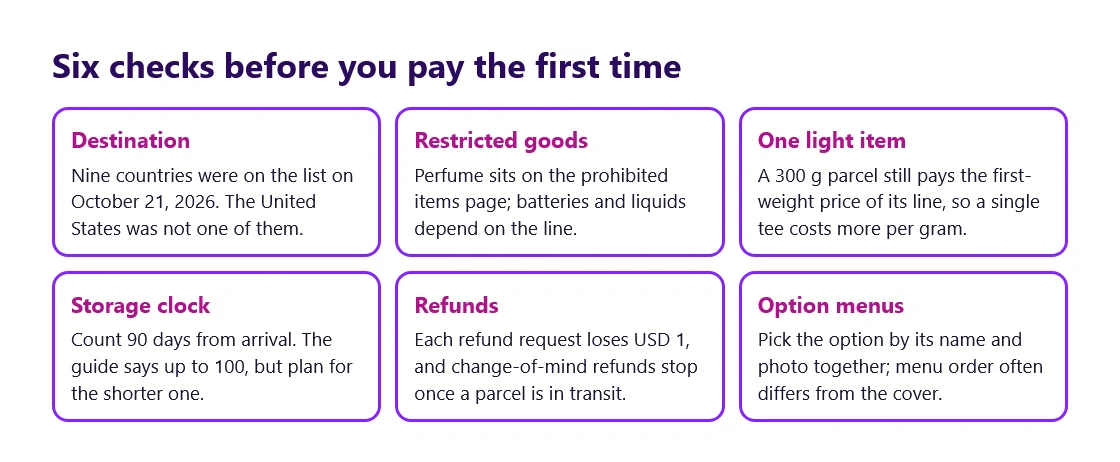
- Registering before checking that your country is on the destination list.
- Buying perfume or battery goods and finding out at the parcel stage that no line will take them.
- Shipping one light item on its own and paying the full first-weight price for it.
- Letting day 90 pass while waiting for one slow seller.
- Asking for a refund after the parcel has been handed to the carrier, when the terms no longer allow change-of-mind refunds.
- Picking an option by its position in the menu instead of its name.
Brand words deserve their own line. EastGoBuy prohibits counterfeit and IP-infringing goods, its staff check appearance rather than authenticity, and its disclaimer puts responsibility for such goods on the source. Avoid listings that sell a brand you know for a fraction of its price.